Whether it’s a private rented property or a House of Multiple Occupation (HMO), it’s the landlord’s responsibility to maintain compliance with all relevant electrical safety regulations. The landlord must ensure that the property complies with The Electrical Safety Standards in the Private Rented Sector (England) Regulations 2020 which have made testing compulsory in all rented properties. And one aspect of this is to ensure that the fuse box or the consumer unit is fit for purpose.
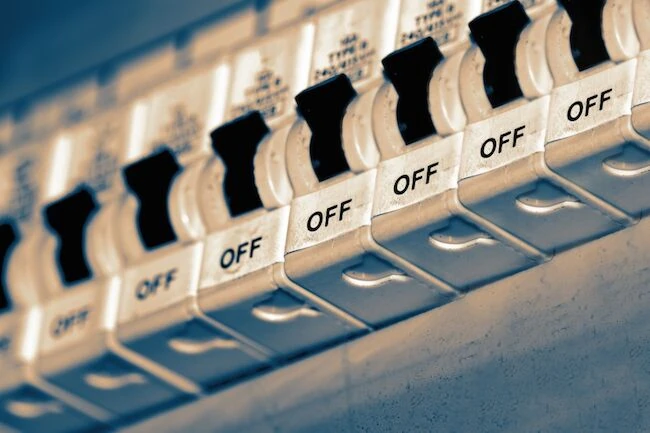
Ultimately, a fuse box and a consumer unit serve the same purpose in that they both manage the distribution of electricity through multiple circuits and instantly cut the power off should a power overload or short circuit occur on one of the circuits. This is also known as ‘tripping’. When this happens, the consumer unit switches the power off using the circuit breaker linked to the circuit that’s overloaded or got the short circuit. Once the fault is repaired, the circuit breaker can be re-activated. A fuse box, however, contains fuses rather than circuit breakers, and each fuse has a wire that will melt in the event of an electrical overload. In the same way as a consumer unit, this trips the circuit and cuts the power.
If your rental property contains an old fuse box then it’s unlikely to comply with current regulations and will therefore need to be changed for a modern consumer unit. Should you have a plastic unit it’s highly recommended to swap that for a metal clad fire rated equivalent, and if your fuse box contains individual fuses that are housed within a fuse carrier that you can remove and replace by hand, then that’s also a sign that you should upgrade.
In terms of the best solution for your rental property, a main switch consumer unit includes just one main switch which controls all circuits within the home. A dual RCD consumer unit allows the circuits to be split between two sets of RCDs, meaning that you can still have power on one floor of the property if the RCD on the other floor were to trip. This solution is ideal for houses with multiple storeys. Another alternative is for each individual circuit to have its own rcbo fuse protection which in turn will only isolate the individual circuit if a fault occurred. In this case, should, for example, your oven stop working, all other appliances and sockets in the home would remain operational.
For Mark Smith, owner of MS Electrical, the regulations around electrical safety testing within rental properties is a welcome development, especially as it’s leading to the replacement of outdated and potentially unsafe fuse boxes and consumer units. ‘Over the years we’ve seen some real horror stories in rented accommodation, so we’re delighted that the government has intervened to make testing compulsory,’ comments Mark. ‘One key aspect of providing a safe environment for tenants is in ensuring that the fuse board or consumer unit in the property is fully compliant, and that’s something that we look very carefully at during our inspection.’
MS Electrical Services offers fixed wire testing and EICRs in Cambridge, so please contact us to book an appointment.