The UK has a large student population, but one gap in their knowledge might well be electrical safety, so it’s prudent for educational establishments to remind them of the fundamentals. We work with a number of schools and Cambridge University colleges, and we focus both on keeping their electrical safety in check and providing simple tips to avoid potentially serious incidents with electricity.
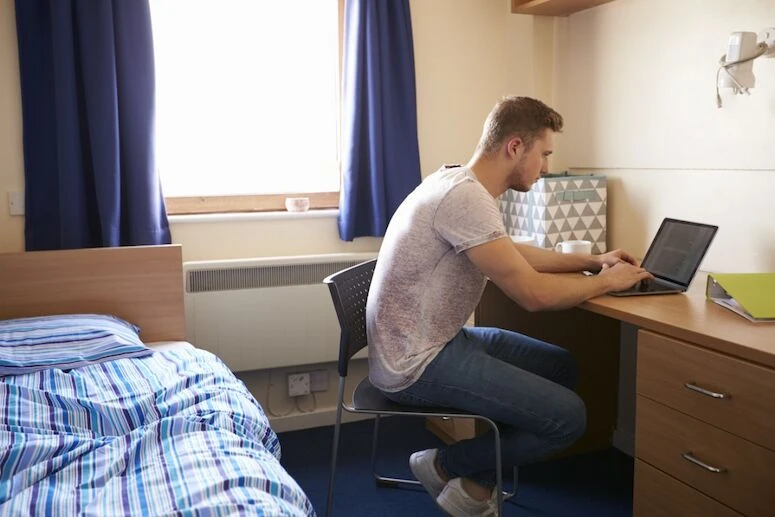
In general, students should inspect appliances for damage, avoid overloading their sockets and never leave devices unattended when they’re charging. All appliances should be in good working order and students should report any issues to their accommodation provider or, if they’re in rented accommodation, to their landlord.
Our general tips for electrical safety in student accommodation include:
- Appliances: Check for any damaged cables, plugs or casings on all your electrical appliances. Turn all electrical appliances off when you’re not using them, especially when you’re away from your room.
- Sockets: Avoid plugging too many devices into one socket or extension lead, because that’s likely to cause overheating and even fire.
- Extension leads: The safest extension leads come with individual switches to turn off each individual appliance.
- Cables: Try to keep these neat and tidy to minimise tangling, and never run cables under carpets, rugs or other electrical equipment.
- E-scooters and e-bikes: Charge these in designated charging areas rather than in your room, corridor or stairwell.
- Battery packs: Always charge these when you’re able to keep an eye on them and never leave them charging when you’re out.
- Laptops, tablets and phones: Placing your laptop, tablet or phone on a soft surface can cause overheating and damage, so always use a desk or counter-top, and avoid leaving them to charge unattended.
- Toasters and microwaves: Never use metal objects near your toaster or microwave when it’s plugged in or in use.
- Clothes: It’s tempting to speed up the drying process but never hang wet clothes over electrical appliances such as wall heaters.
- Hoovers: Don’t use a hoover to clean up anything wet as water and electricity should never mix.
Accommodation providers are responsible for ensuring the electrical safety of the properties. In addition, landlords must demonstrate to their tenants that an NICEIC-accredited electrician has carried out an EICR (Electrical Installation Condition Report) test. Failure to do so could result in a fine.
At MS Electrical we offer PAT testing, fixed wire testing and EICRs in Cambridge. If you have any doubt about your responsibilities as an accommodation provider or landlord, please call us on 01223 850301, send us an email or complete our enquiry form.