Despite the easing of Covid-19 restrictions, many people are adapting to the New Normal of either working permanently from home or adopting a hybrid model where they divide their time between home and the office. Given the number of professionals now using their home as their place of work, it’s vital to ensure that the fundamentals of electrical safety are observed.
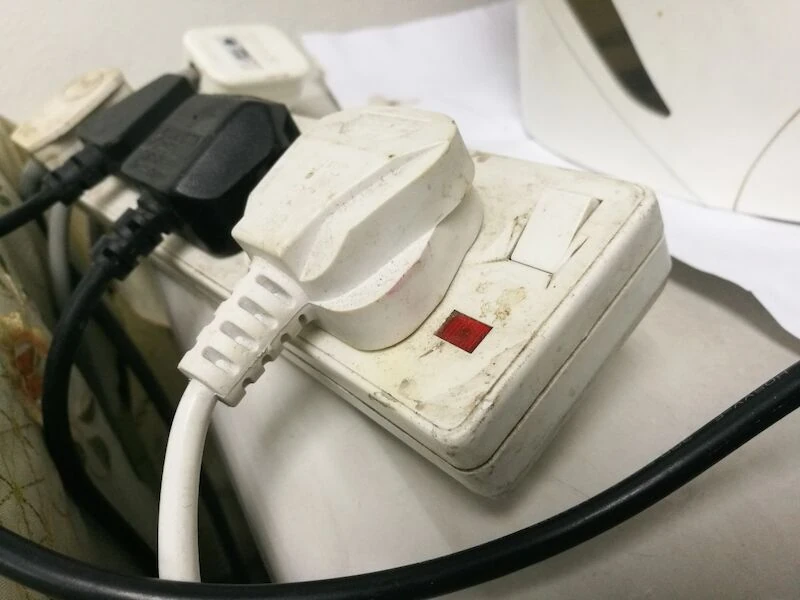
Our homes were not designed and equipped for work, so there is a likelihood that there will be a lack of sockets, and the temptation to overload the ones that are available may arise. And it’s not uncommon for us to hear of daisy chaining, and even of charging devices on beds and under pillows. In fact, a recent survey indicated that around 33% of homeworkers who were using extension leads or adaptors as part of their work-from-home setup were unaware of the dangers of overloading plug sockets, which include electric shock and fire. Not only that, a shocking 44% of those using extension leads admitted to daisy chaining, or plugging one extension cable into another to give more power possibilities.
The risk of domestic fires is significantly increased if basic advice around electrical safety isn’t observed. In summary this includes:
- Avoid daisy chaining
- Avoid overloading plug sockets
- Charge laptops and devices on a hard, non-flammable surface
- Avoid charging electrical items overnight
- Keep your desk and work area clutter-free
- Take care with cables to ensure they have no wear and tear
- Route cables to avoid them becoming a trip hazard
- Turn off the hob and avoid leaving it unattended
In addition, checking that your smoke alarms are all functioning and your escape routes from the building are all clear and unobstructed will help to save lives should a fire break out.
For Mark Smith, owner of MS Electrical, the move to home and hybrid working means that employers need to reinforce the messaging around electrical safety. ‘As specialist electrical safety testers, we’re used to carrying out PAT testing and fixed wire testing in commercial premises,’ says Mark. ‘The Covid-19 pandemic has, however, seen a big change in working patterns such that many employers are having to manage their electrical safety in multiple locations and also to educate their staff as to basic disciplines they need to adopt when working remotely. We are, of course, continuing to carry out electrical safety testing in offices and commercial buildings, but we are also increasingly testing appliances that are being used at home. We’d encourage any employer who has concerns over their electrical safety to stress the importance of electrical safety to their staff and contact us to discuss how we can assist.’
At MS Electrical we specialise in keeping electrical safety in check by offering PAT testing and fixed wire testing for organisations in and around Cambridge, so why not contact us for advice or to request a no-obligation quotation?