With so many appliances and gadgets around our homes and offices, it’s no surprise that our electrical sockets are working overtime and are therefore likely to need replacing at some point. But how do you know when that might be the case? Our handy guide is designed to give you all the scenarios in which you might need to change your sockets for new versions. And this is especially important as the level of electricity flowing through a faulty socket is high enough to cause fires, injury and – worst case – fatalities, so it’s vital to act before it’s too late.
Lack of power
It sounds obvious, but a surefire sign that a socket isn’t functioning correctly and may need replacing is if there’s no power coming through it. It’s important not to condemn the socket without checking that there isn’t another reason for the dead socket, such as a power cut, for example. Check other sockets to ensure that they’re working correctly, as a lack of power to some or all of them may also indicate that there’s an issue with the fuseboard. Try an appliance in that socket and others to see whether it works elsewhere – if it does, then the socket itself may well be the culprit.
Intermittent power loss
It’s relatively common for a faulty socket to work intermittently, and this can be both frustrating and dangerous. It’s usually a sign of a loose connection within the socket, so it’s important to check first that the intermittent cutting out isn’t down to the appliance itself by trying it in a couple of different sockets.
Blown fuses
The presence of a fuse in any appliance is to prevent electric shocks and to reduce the risk of electrical fires caused by a sudden surge of electricity. The fuse should blow the instant the electrical surge happens, but this shouldn’t be a regular occurrence. If it is, the likelihood is either that the appliance itself is faulty or that the socket needs replacing. Again, try the appliance in other sockets to determine where the problem lies.
Visible damage
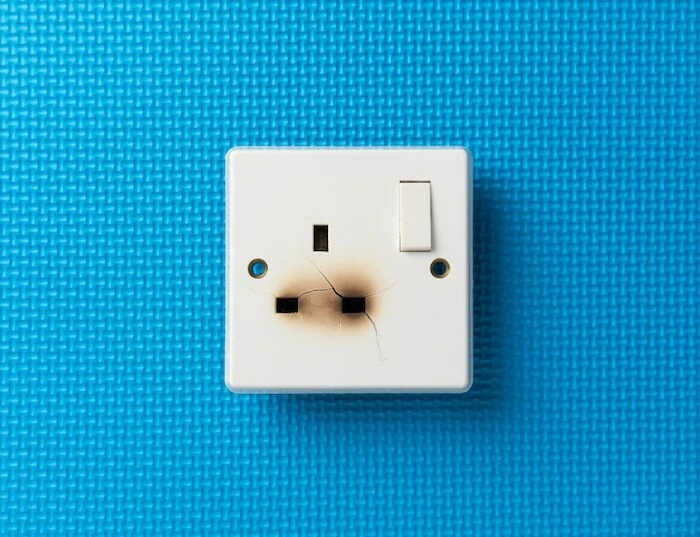
While electricity may be invisible, the signs of damage to a socket won’t always be. The role of a socket is to act as an intermediary between your appliance and the electrical supply by keeping the dangerous parts of the mechanism hidden away. If you notice, however, that the face of the socket is cracking, you can’t fasten the socket to the wall correctly or the socket itself is melting, then it’s time to replace it.
Plugs don’t stay in the socket
The prongs of a plug connect with the contacts within the socket in order to hold it in place. If this doesn’t happen and the plug feels loose then the tension with the contacts is likely to be failing. As with other faults, this is both irritating and potentially dangerous as the plug will not be able to maintain a consistent connection and supply of electricity, so action is required. In particular, a plug that is hanging out of a socket while live can be hazardous as it’s carrying the required level of power without the full protection that a socket can provide.
Noise
Your sockets should be silent, so if you begin to hear any noise at all then the socket needs attention. The most common cause of a noisy socket is when a faulty connection causes the power to ‘arc’ from one location to another, and this should be addressed as a matter of urgency.
Signs of burning
There is absolutely no reason that you should notice scorch marks around your sockets, unless there’s a fault. Scorching can be caused by a faulty connection and we’d recommend taking the problem socket out of use and having it replaced before a fire breaks out.
Smell of burning
A smell of burning may be the first sign you notice, and if you do, urgent action is required. Stop using the socket and have it replaced as soon as you can.
As an electrical safety testing specialist, Mark Smith, owner of MS Electrical Services, believes that regular visual inspections of sockets at home and work can be really beneficial. ‘We all use lots of sockets in the course of our daily lives, but it’s not always second nature to check them to make sure they’re operating correctly,’ comments Mark. ‘As with everything, plug sockets do have a lifespan, so we recommend taking a look on a regular basis to make sure there are no visible signs of deterioration, and we also strongly suggest not ignoring other indications such an intermittent or permanent loss of power or telltale noises coming from the socket itself. Electricity is fantastic, but it can also be dangerous, and ignoring signals that any of your sockets is faulty could be a fatal mistake.’
MS Electrical offer fixed wire testing and PAT testing in Cambridge, so please contact us to request a no-obligation quotation.