An electrical accident at work can be caused by a number of factors, but here are what we regard as the most common, and in most cases they’re relatively easy to guard against.
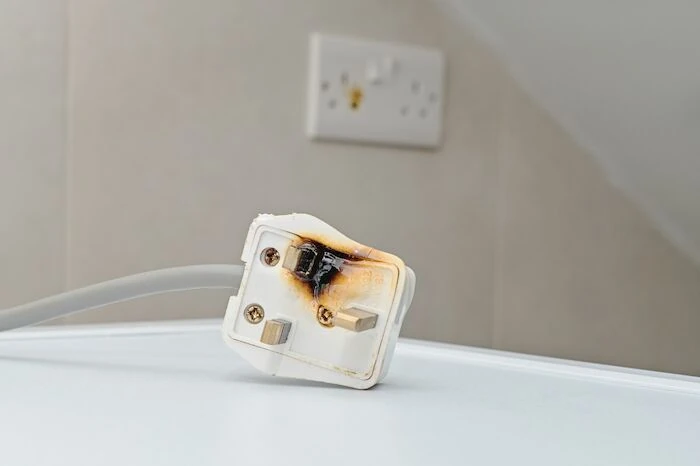
Inadequate maintenance
Frustratingly, under-maintained electrical installations can be the most frequent cause of an electrical accident in the workplace. In reality, business owners have a duty of care towards their staff, visitors, suppliers and anyone else who will be using their premises. Failing to maintain an electrical system can lead to an accumulation of dust, dirt and debris, all of which can cause issues with electrical safety. Problems in this area can include wear and tear, breakages, malfunctions, overheating and fire, so maintenance needs to be at the forefront of every business owner’s mind. A regular PAT testing and fixed wire testing regime will help to avoid any electrical accidents.
Faulty wiring
Wiring is of course an essential component of any electrical installation, but in our experience it’s one of the most common causes of problems around the overall safety of your premises. A key aspect here is when the installation has been in place for a period of time and the wiring has become old and/or damaged, but there is also the possibility that it may have been incorrectly installed from the outset. Wiring issues can lead to short circuiting, sparking and fire hazards, but can also inhibit the efficiency of your entire electrical installation, so it’s prudent to guard against this by only engaging a qualified electrician to undertake any work. Should any problems be unearthed during a fixed wire test, it’s imperative to get them resolved in a timely manner and we’d recommend encouraging all staff to keep an eye out for any fraying wiring, loose connections or exposed wires.
Surges of power
Power surges occur when the current or voltage of your electrical installation suddenly spikes or drops without warning. Outside – and therefore uncontrollable – factors such as lightning strikes, fluctuations at the grid and power cuts can cause a power surge to occur. Another common cause is the switching on or off of large devices such as generators, so it’s important to proceed with caution when doing this. While it’s impossible to prevent external factors, you can mitigate against power surges to some extent by installing surge protectors and voltage regulators. Avoiding any overloading on your circuits can also be beneficial here.
The working environment
Whatever the nature of your working environment it will be sure to have an effect on your electrical setup. Dust, moisture and changes in the ambient temperature can all have an impact on your electrical setup in terms of its conductivity, resistance and/or insulation. Such environmental factors can result in your electrical components rusting or corroding, and this can affect both their performance and their overall safety. The rule of thumb here is to avoid contact with water and moisture and to protect your installation with vents and covers.
Unintentional contact
While it’s relatively straightforward to ensure that your electrical installation is safe in itself, it’s more difficult to guard against human behaviour. Unintentional contact comes into play when someone in your premises unwittingly touches a live part of your electrical installation and as a result suffers an electric shock, burn or an electrocution that can cause injury or even death. To reduce the risk of this, our recommendation is to ensure that your electrical system and its components are switched off when they’re not being used. Covering and clearly labelling these items can also contribute to a safer working environment for everyone.
Basic errors
It’s likely that your responsible person – and your Health & Safety team, should you have one – will be fully trained and briefed on the dos and don’ts when it comes to electrical safety. However, in a smaller organisation there’s a risk that someone without the requisite training may be tasked with electrical safety. This is where basic errors can creep in, and these can include things such as continuing to use faulty equipment, overloading your existing circuits and even touching a live wire. To mitigate against this, it’s advisable to carry out a visual check of all your equipment prior to use, to ensure that you’re wearing the correct safety gear and to follow any manufacturer’s instructions without fail.
MS Electrical offers PAT testing and fixed wire testing in Cambridge. Please contact us for advice or to request a no-obligation quotation.